Inclusiveness

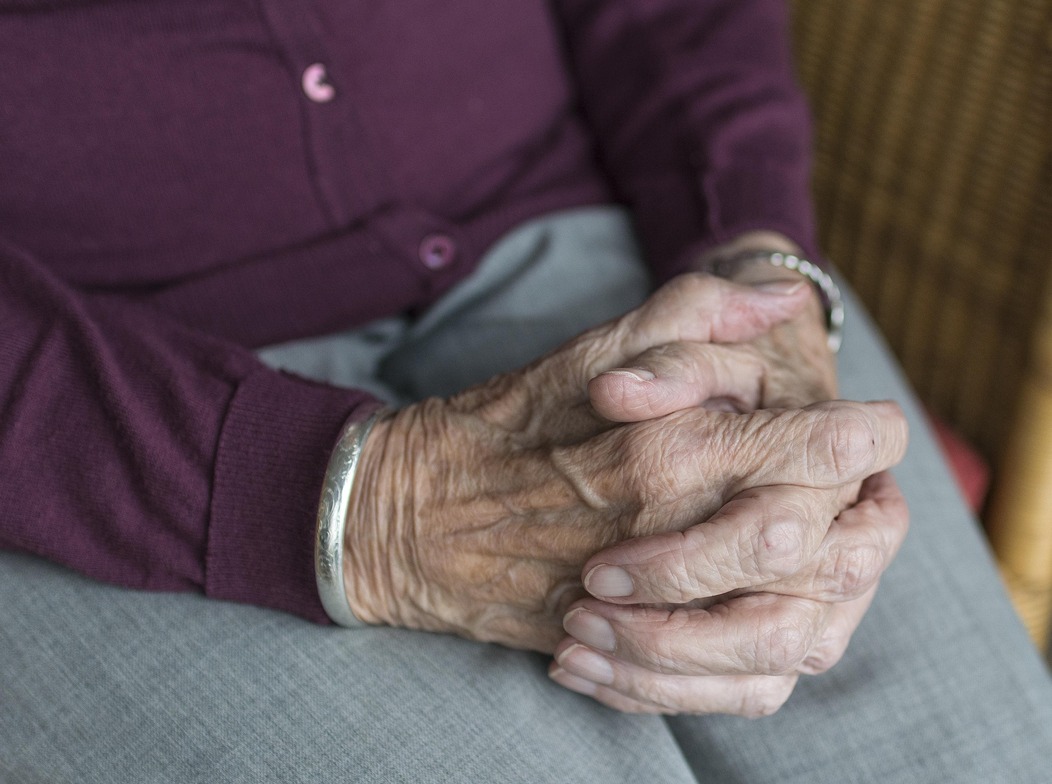
Welcome back to my little Pastor’s corner. Today I just wanted to talk briefly about the United Methodist Church, particularly the “inclusiveness of the Church” and what that means in who we are and how we are to treat people. I am offering this in the context of elder care in our communities and nation.
The United Methodist Church was formed in 1968 when the Evangelical United Brethren and the Methodist Church merged. At the founding they created a constitution that helped guide and structure the new denomination and began what we now know as the Book of Discipline. This constitution begins by naming the parties of the merger and moves into a unified statement of beliefs.
The very first that is fully expressed is found in paragraph 4 and reads as such. “The United Methodist Church is a part of the church universal, which is one Body in Christ. The United Methodist Church acknowledges that all persons are of sacred worth. All persons without regard to race, gender, ability color, national origin, status, or economic
condition, shall be eligible to attend its worship services, participate in its programs, receive the sacraments, upon baptism be admitted as baptized members, and upon taking vows declaring the Christian faith, become professing members in any local church in the connection. In The United Methodist Church no conference or other organizational unit of the Church shall be structured so as to exclude any member or any constituent body of the Church because of race, color, national origin, status or economic condition.”
I lift this up today to say who we are, who we have always been, and who we are continually called to be. Each person is made in the image of God and all persons are of sacred worth. But we do not always treat them as such, we do not live this out perfectly as individuals or as organizations and governments. Our imperfection
however should not move the goal to become easily attainable but rather we must strive toward where God is calling us and moving us with through the Holy Spirit.
When we look at the elderly in our society for decades now we have excluded them because of their status or economic condition. We have designed our society to function without them and removed them. Now they are out of our sight and our mind but not out of our budgets and thus earned the label as an economic drag,
“When people get older, you’re going to have more retirees, so fewer people as a percentage of the population are working,” said Kathleen Mullen, one of the authors and an associate professor and Petrone Chair of Economics in the University of Oregon’s College of Arts and Sciences.
“That’s obviously going to have a negative effect on economic growth.”
While this may be a factual truth of the economy, when we have removed all other qualifying statements about them as people and removed them from the intersection of every day living that factual stamen becomes a label with no counterbalance. It bubbles up into toxic practices, segregation, dehumanization, and systemic policies that amplify the problem.
As the Church (not the organization) but as the body of a living Christ in this world, how can we live in such a way to battle this exclusion. This isn’t about our local buildings but about seeing all of creation as our parish. It is about seeing the Kingdom of God beyond our sanctuary doors and our neighbors as children of God.
Yes it will cost us, that is the point. It will cost us time, comfort, money, and personal freedoms as we make changes. But that is what Christ calls us to. He calls us to pick up our cross and follow him. To make sacrifices not just for ourselves, but for the mission of God. To love our neighbors as much as ourselves, fighting for them to have the same abundant life we want for ourselves, and God wants for all of us. Full of healthy relationships, access to resources, and connected in a loving supportive community with Christ at the center.
Peace in God,
Pastor Jon

-
Glen Dale UMC